Prof. Suraj Mahajan
Head, Artificial Intelligence & Machine Learning Department
B.E.(ECE), M.E (IT), AIML PG Cert. (IIIT, Nagpur), Ph.D*
+91 99215 47001
hod.aiml@tgpcet.com
Our objective is to develop graduates who possess not only technical expertise but also a deep understanding of the domain-specific applications of AI and ML solutions. The curriculum is continuously updated to include the latest advancements, tools, and technologies. Students gain comprehensive knowledge in areas such as deep learning, neural networks, natural language processing, generative AI, robotics, and computer vision, preparing them to address real-world problems using cutting-edge AI models.
The ongoing digital revolution is reshaping every facet of business, from innovation and operations to customer engagement and financial strategy. To thrive in this environment, organizations must embrace data-driven approaches. Our AI & ML program equips students to design intelligent algorithms and scalable solutions that support this digital transformation.
Our experienced faculty bring a blend of academic excellence and industry insight, ensuring high-quality education and mentorship. Our graduates enjoy excellent placement opportunities with reputed companies worldwide, reflecting the department’s strong industry connections.
To enhance global exposure, the department actively participates in international conferences and initiatives, offering students opportunities to interact with global experts and stay informed about emerging trends and breakthroughs in AI.
The department is in the process of establishing an IEEE student chapter to further encourage research, innovation, and the development of technical and leadership skills. These initiatives aim to prepare students not just for employment but to become pioneers and leaders in the AI field.
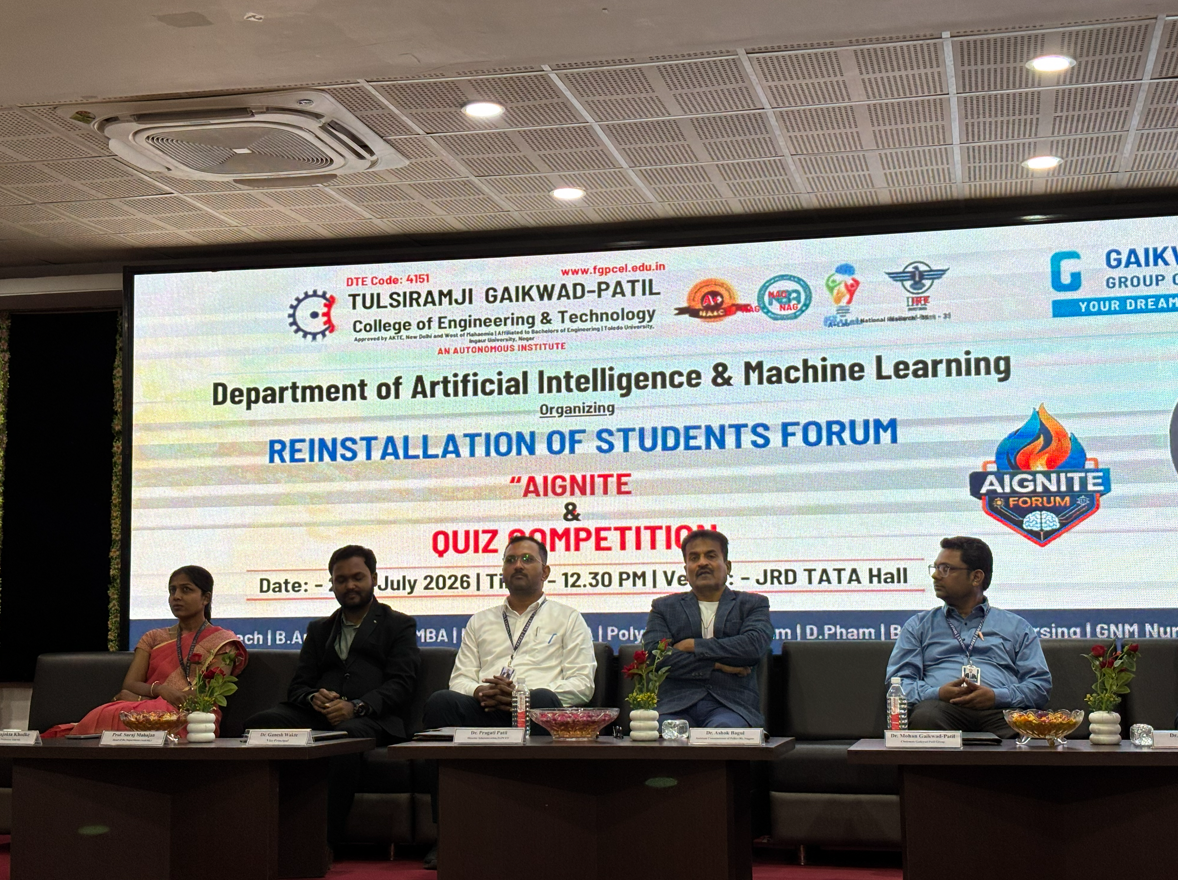
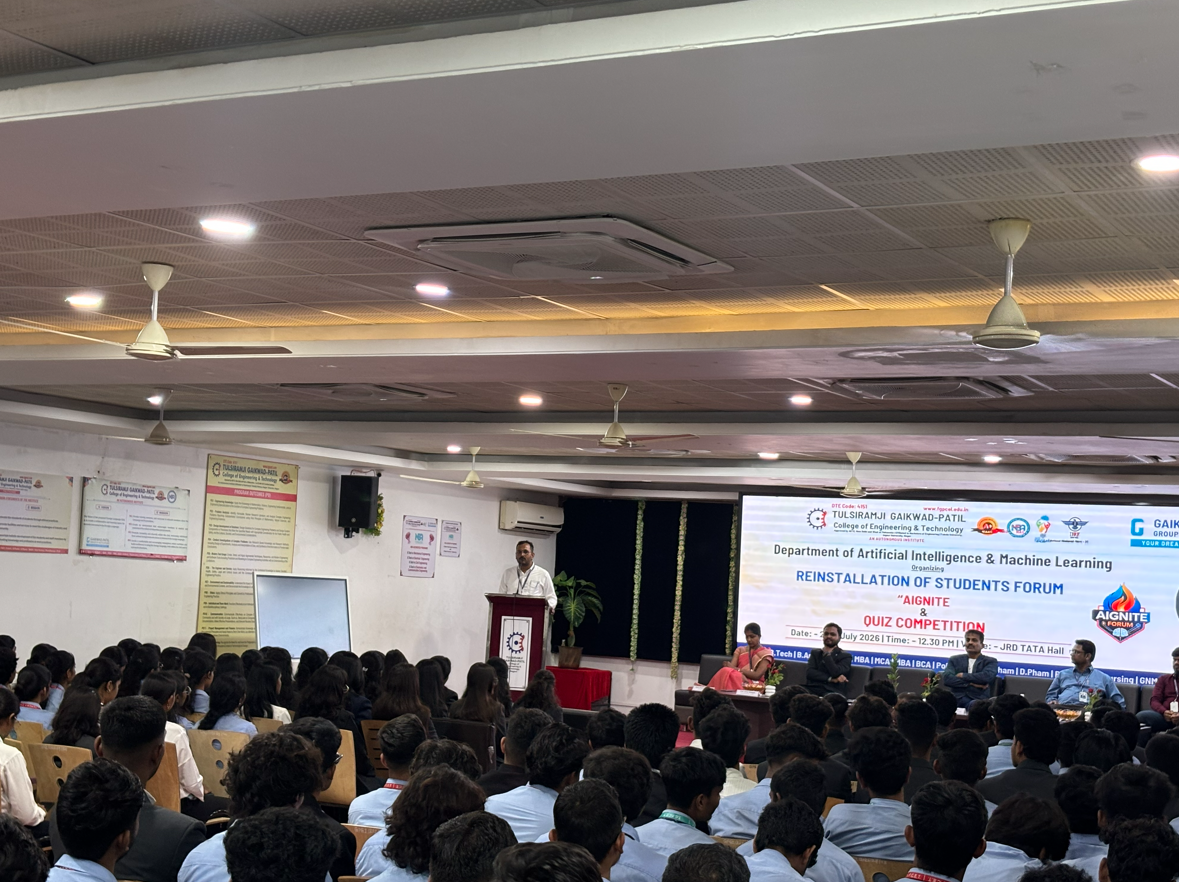
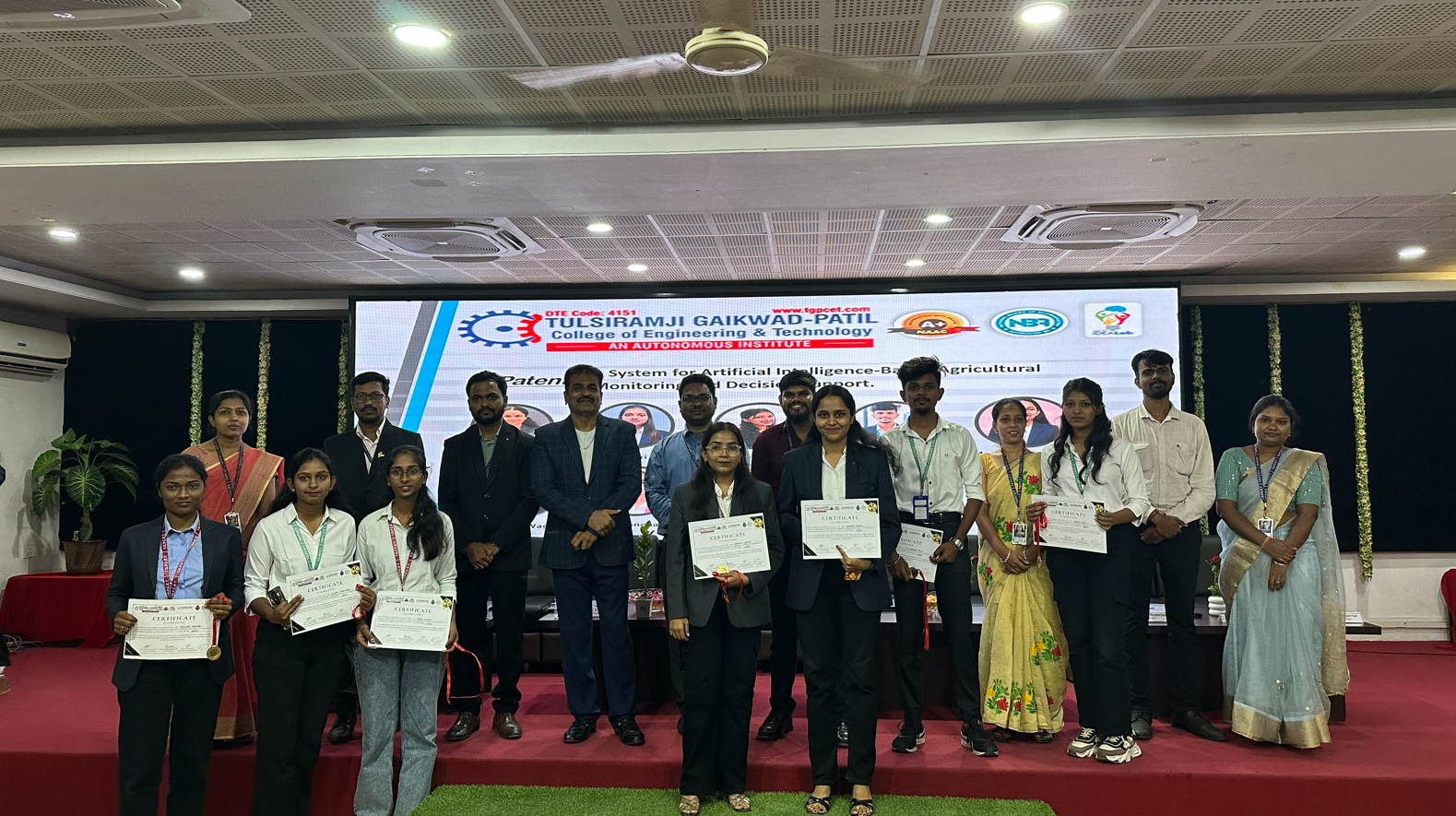
Beyond academics, the department promotes holistic growth by supporting cultural, sports, and extracurricular activities through vibrant platforms such as the AI & ML Club and the Algnite Forum.
In summary, the Department of Artificial Intelligence and Machine Learning at Tulsiramji Gaikwad-Patil College of Engineering and Technology is dedicated to academic excellence, industry collaboration, global engagement, and the comprehensive development of students. We are committed to shaping skilled, innovative, and future-ready AI professionals poised to lead in this transformative field.
Department of Artificial Intelligence and Machine Learning of Tulsiramji Gaikwad-Patil College of Engineering and Technology Founded in 2024, the Department of Artificial Intelligence and Machine Learning at Tulsiramji Gaikwad-Patil College of Engineering and Technology has swiftly become a prominent centre for advanced learning and research in this rapidly evolving field. The department offers a B.Tech. program in Artificial Intelligence and Machine Learning with an annual intake of 150 students. Our core mission is to nurture young talent and prepare them to excel in the dynamic and fast-paced world of AI.
The B.Tech. program is designed to meet the increasing demand for skilled professionals capable of leveraging data, creating intelligent systems, and driving innovation across industries. AI and ML, as interdisciplinary fields, focus on building systems that enable intelligent decision-making and problem-solving.
Aligned with the National Education Policy (NEP), our curriculum ensures a strong balance between theoretical foundations and hands-on practical skills. We regularly conduct skill development workshops and training sessions in collaboration with industry experts to bridge the gap between academia and industry. Students benefit from annual industry visits and a compulsory six-month internship, providing real-world experience and exposure to current industry challenges. Additionally, the department has established MoUs with leading organizations to foster collaborative learning and innovation.
Vision
To emerge as a learning Center of Excellence in the National Ethos in the domains of Artificial Intelligence & Machine Learning
Mission
↪ To provide quality technical education that equips students with practical skills and knowledge aligned with current industry standards and emerging technologies.
↪ To address societal and industrial challenges by fostering collaboration between academia, industry, and communities for inclusive development.
↪ To nurture innovation and entrepreneurial thinking by encouraging creativity, problem-solving, and the development of impactful solutions.
↪ To promote a culture of research, critical thinking, and continuous learning to empowers, stakeholders to adapt and thrive in a dynamic global landscape.
→ Programme Educational Objectives
PEO1: Develop strong analytical, predictive, and decision-making skills to formulate and solve complex problems in intelligent computing and interdisciplinary domains.
PEO2: Pursue advanced studies, engage in research, and drive innovation in Machine Learning and related fields, contributing to technological and scientific progress.
PEO3: Apply technical knowledge with a commitment to ethical standards and professional integrity, ensuring stakeholder satisfaction and making a positive societal impact.
PEO4: Embrace lifelong learning while upholding values of professional ethics and social responsibility.
→ Program Specific Outcomes
→ PSO 1- Develop and apply AI/ML competencies using domains such as Computer Vision, Deep Learning, and MLOps to address real-world challenges across various sectors.
→ PSO 2 - Design and implement intelligent solutions by leveraging Natural Language Processing, Reinforcement Learning, and Robotics.
→ PSO 3 – Adopt engineering best practices and industry exposure to develop practical software systems and engage in impactful research activities.
→ Program Outcomes
| Engineering knowledge: | Apply the knowledge of mathematics, science, engineering fundamentals, and an engineering specialization to the solution of complex engineering problems. |
| Problem analysis: | Identify, formulate, review research literature, and analyze complex engineering problems reaching substantiated conclusions using first principles of mathematics, natural sciences, and engineering sciences. |
| Design/development of solutions: | Design solutions for complex engineering problems and design system components or processes that meet the specified needs with appropriate consideration for the public health and safety, and the cultural, societal, and environmental considerations. |
| Conduct investigations of complex problems: | Use research based knowledge and research methods including design of experiments, analysis and interpretation of data, and synthesis of the information to provide valid conclusions. |
| Modern tool usage: | Create, select, and apply appropriate techniques, resources, and modern engineering and software tools including prediction and modeling to complex engineering activities with an understanding of the limitations. |
| The engineer and society: | Apply reasoning informed by the contextual knowledge to assess societal, health, safety, legal and cultural issues and the consequent responsibilities relevant to the professional engineering practice. |
| Environment and sustainability: | Understand the impact of the professional engineering solutions in societal and environmental contexts, and demonstrate the knowledge of, and need for sustainable development. |
| Ethics: | Apply ethical principles and commit to professional ethics and responsibilities and norms of the engineering practice. |
| Individual and team work: | Function effectively as an individual, and as a member or leader in diverse teams, and in multidisciplinary settings. |
| Communication: | Communicate effectively on complex engineering activities with the engineering community and with society at large, such as, being able to comprehend and write effective reports and design documentation, make effective presentations, and give and receive clear instructions. |
| Project management and finance: | Demonstrate knowledge and understanding of the engineering and management principles and apply these to one’s own work, as a member and leader in a team, to manage projects and in multidisciplinary environments. |
| Life-long learning: | Recognize the need for, and have the preparation and ability to engage in independent and lifelong learning in the broadest context of technological change. |
| Scheme | Syllabus | |
|---|---|---|
| OLD NEP Scheme | III SEM - NEP 2020 IV SEM - NEP 2020 V SEM - NEP 2020 HONORS Scheme MINORS Scheme | |
| NEW - NEP | ||