Prof. Chetan Jambhulkar
Head, Electronics & Communication Engineering Department
B.E., M.Tech., Ph.D*
+91 95033 09891
hod.ece@tgpcet.com
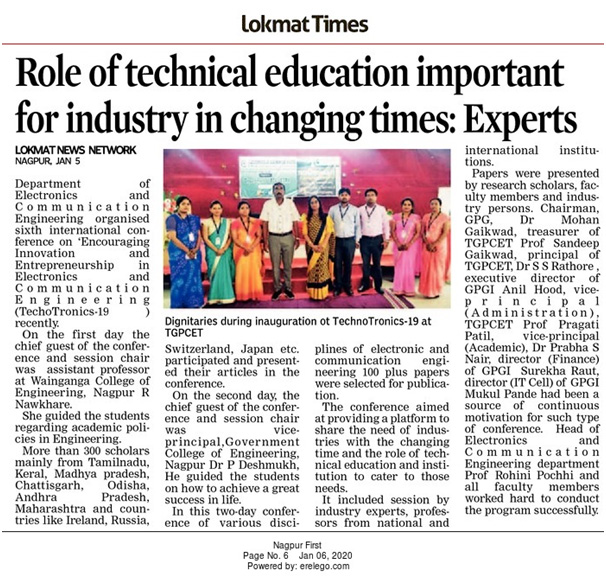
Established in 2007, Department of Electronics and Communication Engineering (ECE) is one of the pioneer Departments of NAAC A+ (3,32 CGPA) and Autonomous Tulsiramji Gaikwad-Patil College of Engineering and Technology, Nagpur. Initially the intake capacity of the Department was 60 in 2007, increased to 90 in 2023 and further increased to 120 in 2024 because of great demand of Electronics and Communication Engineers in the Industries. The research culture in Department was boosted up by initiating PG Program M.Tech. in Electronics and Communication Engineering, in 2011, which has current intake of 18.
The Department has well qualified 15 Faculties, with 3 Ph.D. Faculties, who aim to bridge the gap between academia and industry requirements. ECE Department curriculum focuses on practical applications, guiding students to address societal and economic issues. By integrating theoretical knowledge with hands-on practice research, the Department sharpens the technical skills of the students for meeting the industry needs. This approach ensures students to meet the evolving demands of the technology-driven business world. The curriculum is regularly updated based on alumni input, industry feedback, and recommendations from Governing Body and other stake holders.
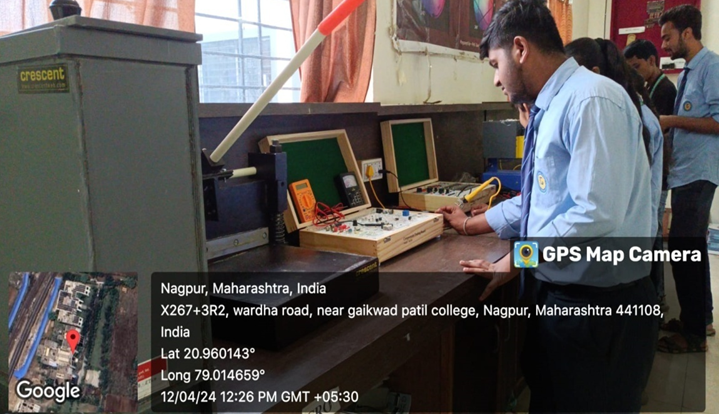
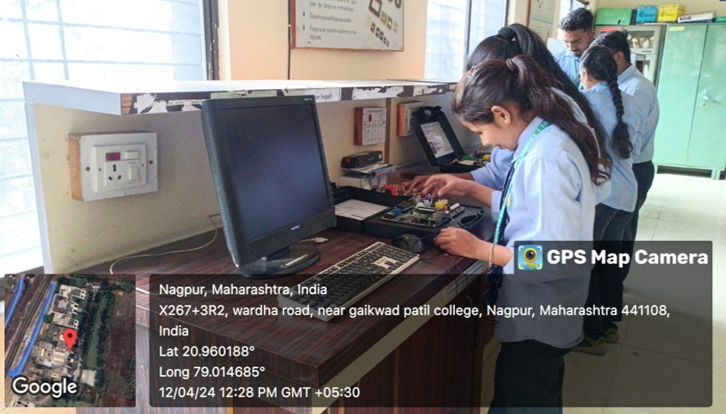
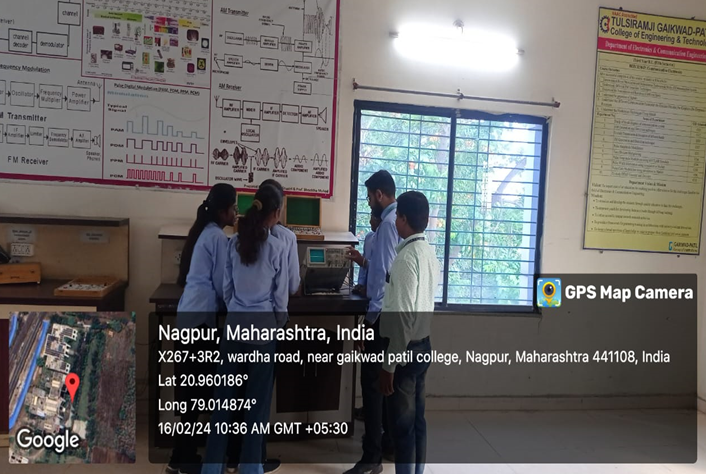
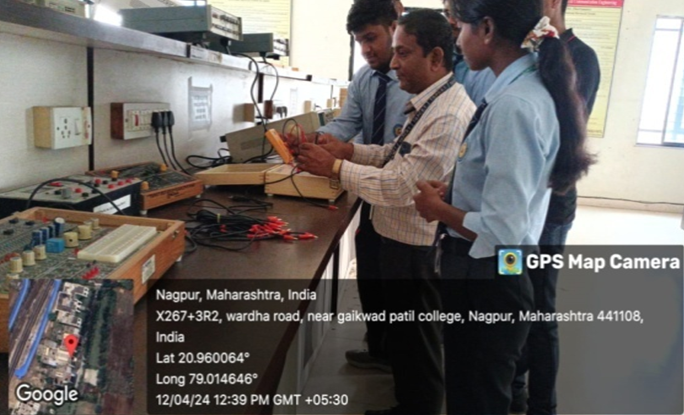
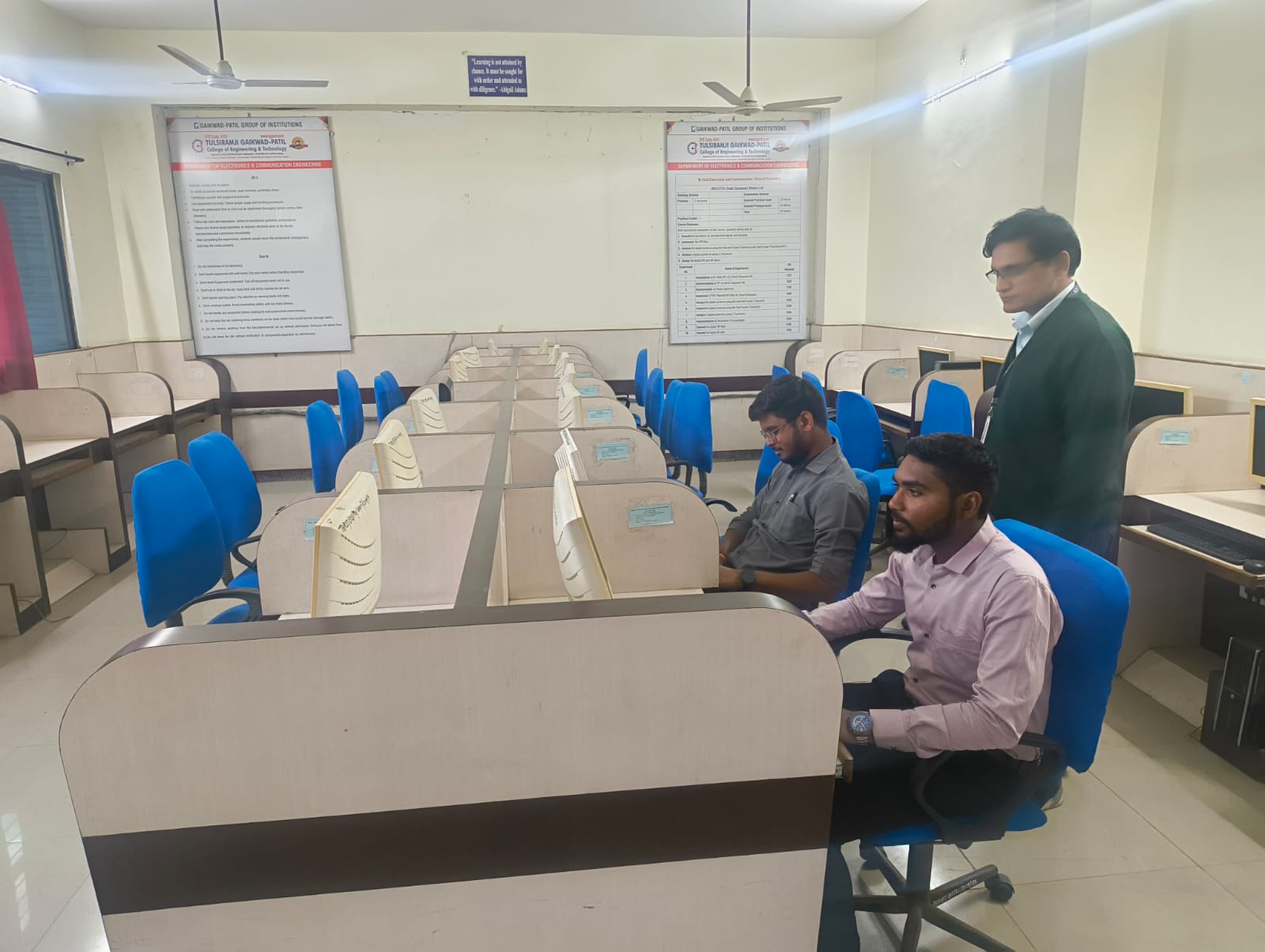
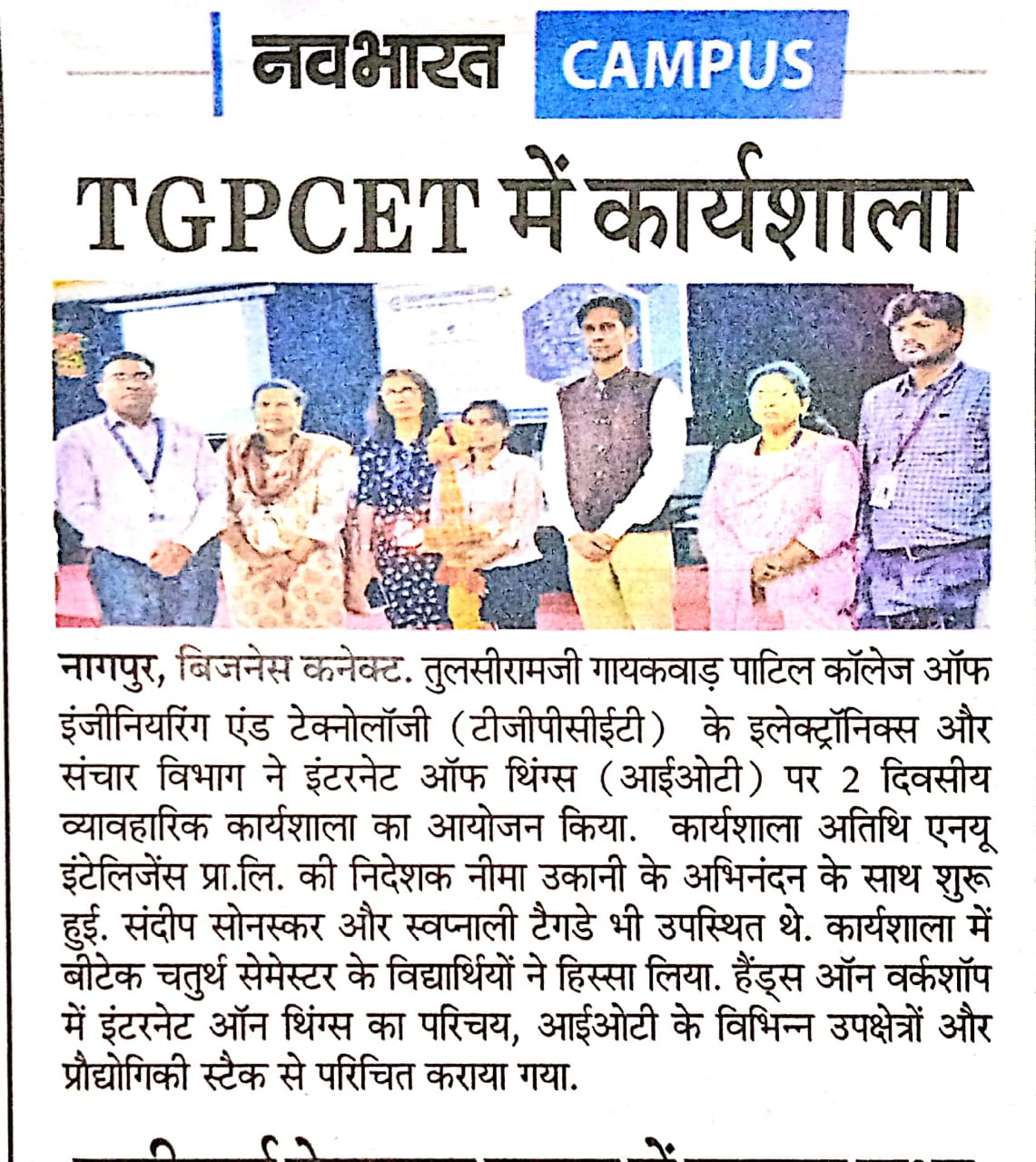
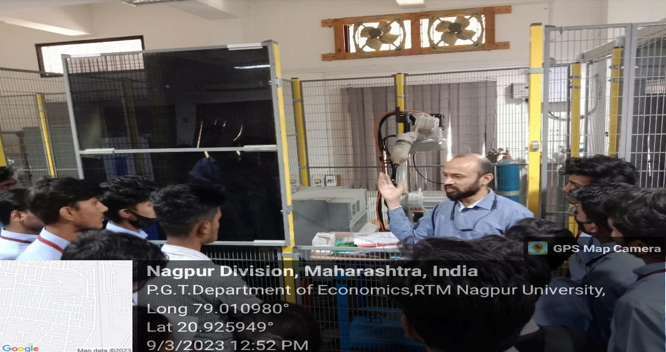
The Department has 11 well equipped laboratories comprising the important fields namely Signal Processing, Embedded Systems, Internet of Things, advanced processors and VLSI technologies. ECE Department strictly follows Outcome Based Education Poilcy and AICTE modeled curriculum with Courses suggested by eminent Academic Council and Board of Studies Members.
ECE Department is committed to achieve the excellence in imparting high quality technical education in the field of Electronics and Communication Engineering under the dynamic guidance of Hon. Management and Higher authorities.
- - Established with B.Tech ECE in the year 2007-08 with an intake of 120*. It has been one of the key departments, active in teaching and research since its inception in 2007. It has well qualified and experienced faculty with novel teaching methods.
- - Research and training activities are based on VSAT, Atmel, µP & µC and SATCOM laboratories. A separate computing facility has been established to carry out project work and design jobs taken up by the department.
- - The Department has a state-of-the-art Microwave & Radar Engineering Laboratory in addition to well-equipped laboratories in the areas of Electronic Devices, Communication Engineering, Digital Signal Processing, Microprocessor and Microcontroller and Digital Electronics.
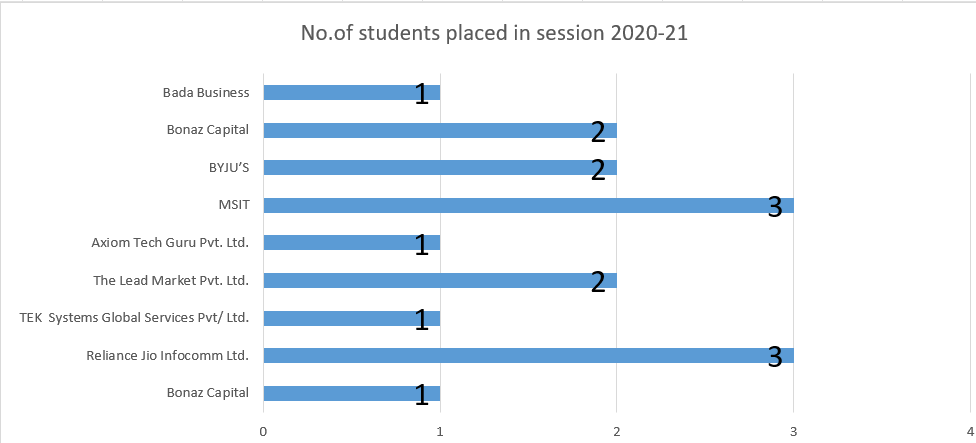
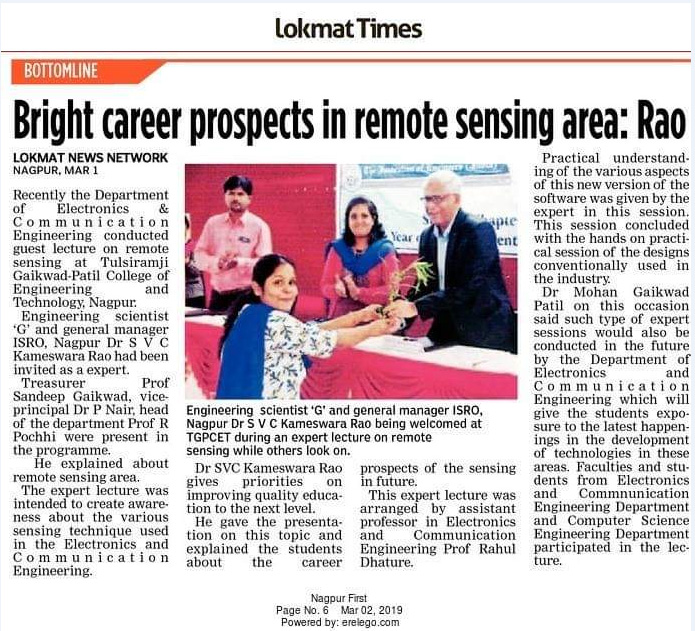
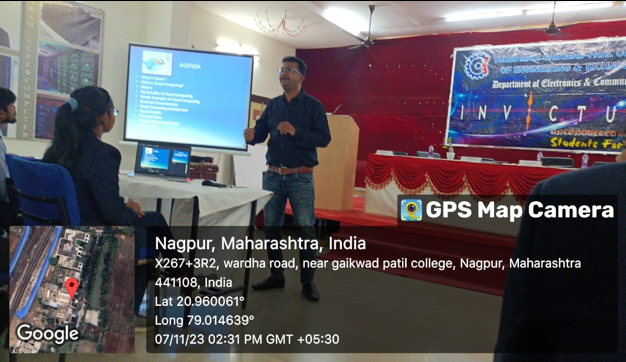
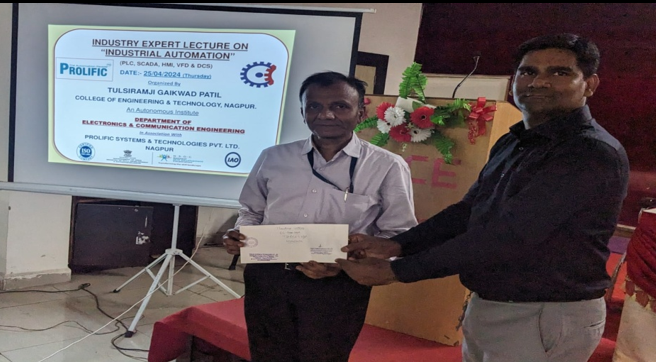
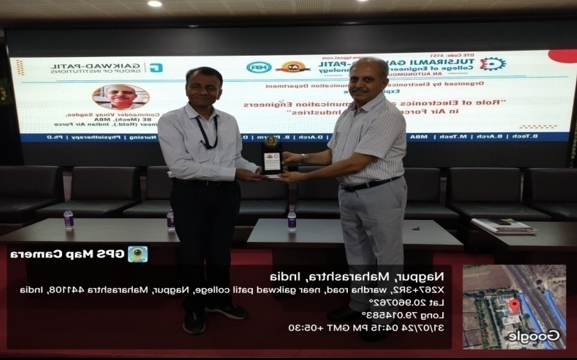
- - The department has Industry Institute Partnership Cell (IIPC) which aims to establish and explore proper links with various departments, agencies and industries all over the country. It also aims to work in close coordination with the industries and organizations for placement and training of the students, to support R & D and sponsored projects from industries, to exchange personnel between the Industries and the Institute by organizing guest lectures by Industrial experts, evaluation of project work, development of curriculum as per industry needs and other academic work in the Institute.
- - The sponsored project of our students “GSM Based Automatic Response System for Locomotive Trouble Shooting” designed for the three phase locomotives WAG 9 / WAP 5 / WAP 7 in Indian Railways, started under the guidance of TRO dept. of Central Railway Commission in Nagpur Division is appreciated by General Manager, Central Railways Mr. Subodh Jain in Ballarshah during his annual inspection of Ballarshah-Sevagram section and is practically implemented in Nagpur division.
- - The project was published in BPQ – SEGM section Booklet-B: Performance Parameter of Central Railway, Nagpur on 17th January 2012.
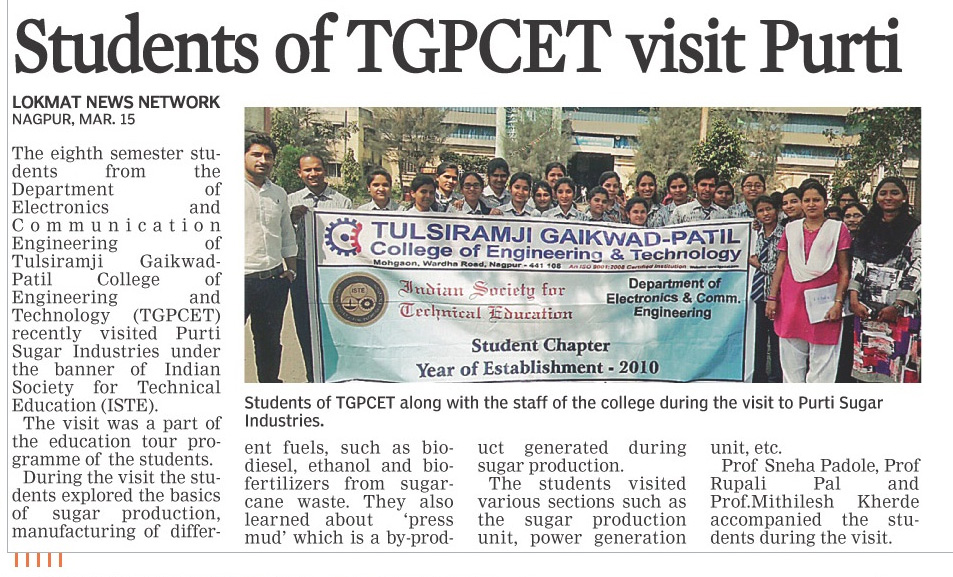
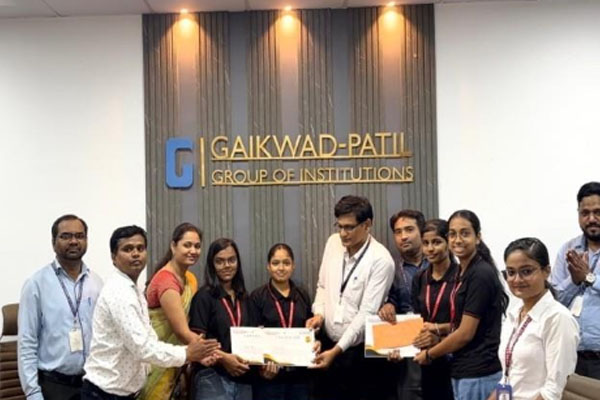
- - Student of ECE Department won 2nd Prize in XVIIth ISTE Student National Annual Convention for best Engineering Project at Rajkot.
Vision
To emerge as a learning Hub and center of excellence in the domain of Electronics and Communication Engineering
Mission
↪ To impart quality technical education through effective teaching learning process.
↪ To provide a platform for addressing societal issues and challenges encountered by industries.
↪ To foster a culture of research and instill innovative and entrepreneurial skills.
↪ To promote lifelong learning in order to foster the holistic development of students and staff through the knowledge and professional ethics.
→ Programme Educational Objectives
PEO1: Demonstrate essential technical skills to identify, analyze and solve problems and design issues in Electronics and Communication Engineering.
PEO2: Apply field knowledge, research and professional practices to meet the requirements of industries.
PEO3: Imbibe lifelong learning practices and entrepreneurship skills in tune with emerging technologies.
PEO4: Inculcate professional ethics and managerial skills to satisfy real life problems for serving the needs of society and environment.
→ Program Specific Outcomes
PSO 1 - Formulate solutions to intricate engineering problems by applying fundamental principles from the Electronics and Communication Engineering technology.
PSO 2 - Develop methodologies to analyze and design circuits in electronics for communication applications to meet the societal needs
PSO 3 – Implement project-based learning techniques to conduct experiments in Embedded Systems, communication system, signal and Image processing, Circuit analysis and design to work professionally in the industry or as an entrepreneur.
→ Program Outcomes
| Engineering knowledge: | Apply the knowledge of mathematics, science, engineering fundamentals, and an engineering specialization to the solution of complex engineering problems. |
| Problem analysis: | Identify, formulate, review research literature, and analyze complex engineering problems reaching substantiated conclusions using first principles of mathematics, natural sciences, and engineering sciences. |
| Design/development of solutions: | Design solutions for complex engineering problems and design system components or processes that meet the specified needs with appropriate consideration for the public health and safety, and the cultural, societal, and environmental considerations. |
| Conduct investigations of complex problems: | Use research based knowledge and research methods including design of experiments, analysis and interpretation of data, and synthesis of the information to provide valid conclusions. |
| Modern tool usage: | Create, select, and apply appropriate techniques, resources, and modern engineering and software tools including prediction and modeling to complex engineering activities with an understanding of the limitations. |
| The engineer and society: | Apply reasoning informed by the contextual knowledge to assess societal, health, safety, legal and cultural issues and the consequent responsibilities relevant to the professional engineering practice. |
| Environment and sustainability: | Understand the impact of the professional engineering solutions in societal and environmental contexts, and demonstrate the knowledge of, and need for sustainable development. |
| Ethics: | Apply ethical principles and commit to professional ethics and responsibilities and norms of the engineering practice. |
| Individual and team work: | Function effectively as an individual, and as a member or leader in diverse teams, and in multidisciplinary settings. |
| Communication: | Communicate effectively on complex engineering activities with the engineering community and with society at large, such as, being able to comprehend and write effective reports and design documentation, make effective presentations, and give and receive clear instructions. |
| Project management and finance: | Demonstrate knowledge and understanding of the engineering and management principles and apply these to one’s own work, as a member and leader in a team, to manage projects and in multidisciplinary environments. |
| Life-long learning: | Recognize the need for, and have the preparation and ability to engage in independent and lifelong learning in the broadest context of technological change. |
Use of Smart Classroom:
Smart classrooms are equipped with the latest technologies and digital tools helps to make teaching and learning better and more effective for teachers and students. This digital transformation enables teachers to prepare dynamic multimedia lessons while helping change students’ outlook towards studies. Additionally, since learning takes place through integrated learning technologies, students become more effective learners, eventually improving their academic performance

| Sr. No | Infrastructure | Quantity |
|---|---|---|
| 1 | Smart Class room | 01 |
| 2 | Class room | 03 |
| 3 | Seminar Hall | 01 |
| 4 | Tutorial Room | 01 |
| 5 | Departmental Library | 01 |
| 6 | HoD Cabin | 01 |
| 7 | Conference Hall | 01 |
| Sr. No | Name of the Laboratory | List of Equipment |
|---|---|---|
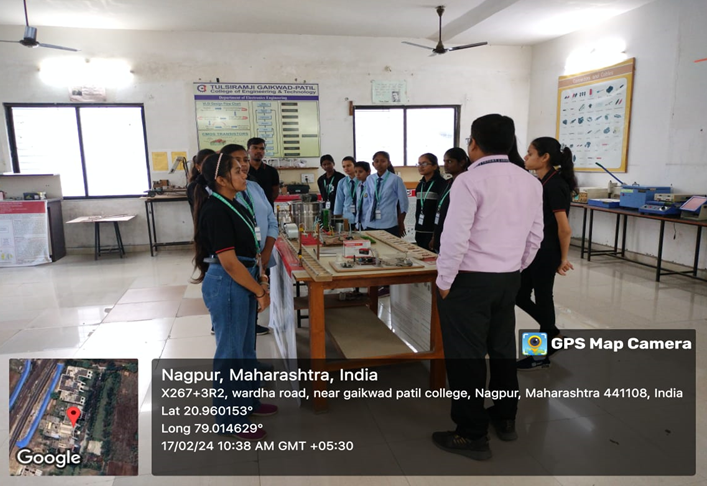
| 1 | Electronics Workshop Lab | • PCB Drilling Machine • PCB Shearing Machine • Proto- Etch Etching Machine • Soldering & Desoldering Practice Trainer • Component Testing Bord • UV exposer |
| 2 | Internet of Things Lab / Industry Supported Lab (ISL) |
• Arduino Development Board with 20 sensors. • Raspberry Pi 4 Development Board . • Node MCU Development Board . |
| 3 | Communication Engineering Lab | • Amplitude (AM) Modulation & Demodulation trainer kit • FM Modulation and Demodulation using PLL IC 565 trainer kit • PAM/PWM /PPM Modulation & Demodulation Trainer kits • DSO 50 MHz.,2CH ,Coloured 20 MHZ Dual Trace Oscilloscope |
| 4 | Electronic Device & circuits Lab |
• Semiconductor (PN Junction) Diode characteristics with Digital Meters • Zener Diode Characteristics with Digital Meters • Half, Full Wave & Bridge Rectifier with & without filters • Transistor Class A, B & C Amplifier Trainer • Characteristics of SCR, DIAC & TRIAC with Digital Meters • Oscillators using Transistor Trainer (All types) |
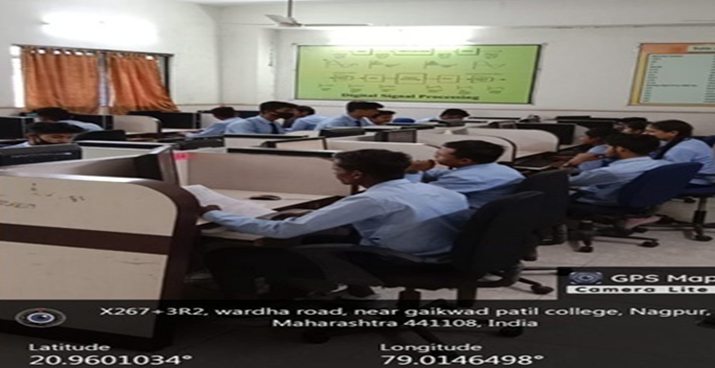
| 5 | Digital Signal Processing Lab | • Personal Computer (PC) • MALTAB • Xilinx Software (2024.1) • CISCO Packet Tracer |
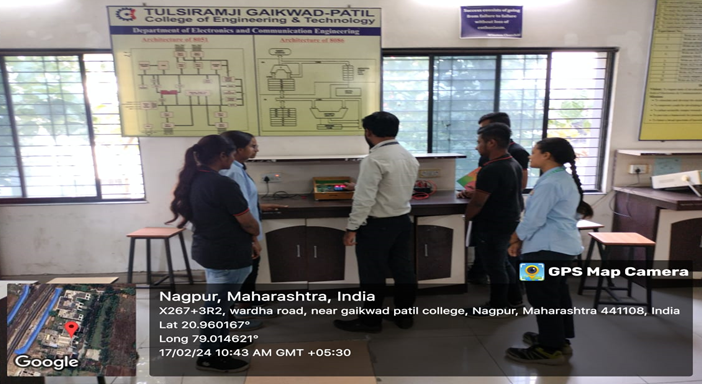
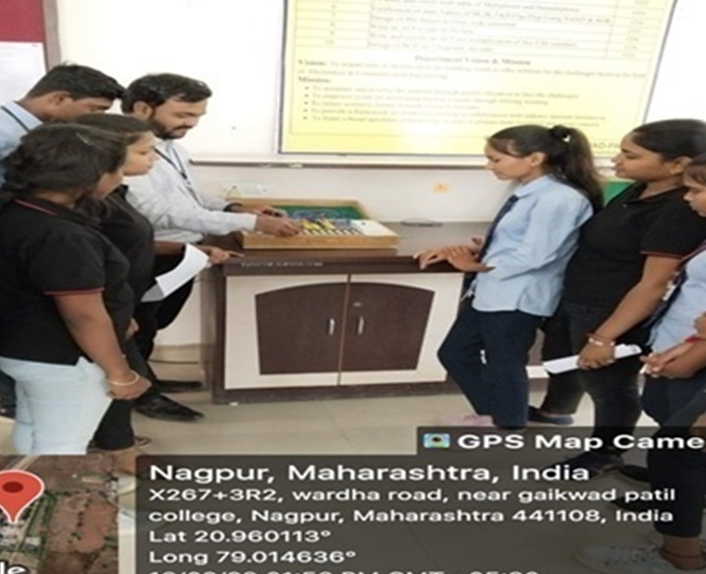
| 6 | Microprocessors and Microcontroller Lab |
• 8051 Microcontroller Development Board • 8086 Microprocessor Trainer • 8085 Microprocessor Trainer • Stepper Motor Interface card for 8051 |
| 7 | Digital Electronics Lab | • Logic Gate Trainer using IC. • NAND & NOR Universal Gates. • Digital IC Trainer Kit. • Half & Full Adder • Flip-Flop Trainer (all types) |
| 8 | Project Lab |
• Cathode Ray Oscilloscope (CRO) • Personal Computer (PC) • Soldering Iron, De-solder Pump |
| 9 | Additional Lab | • PLC SCADA Trainer kit • PM Solar Trainer Kit • Monochrome TV Receiver • Colour TV Receiver |
| 10 | Research Lab |
• Personal Computer (PC) • Spectrum analyzer with TG (9KHz to 2GHz) • Bluetooth Trainer Kit • ATM Trainer • DSP Starter Kit (Code composer Studio) • Xilinx Software for designing DSD |
| 11 | Software Simulation Lab |
• Xilinx Software (Open Source) • Kiel Software (Open Source) • Lab View (Open Source) • ORCAD (Open Source) • Personal Computer (PC) |